STEP 1
Cut out alcohol, caffeine, recreational drugs and nicotine their all pollutants
STEP 2
Drink lots of water 1 - 2 liters a day to flush out body toxins
STEP 3
Fruit get plenty each day and sweeten your sperm taste Pineapple, papaya cranberry, melons, mangos, apples grapes are all good choices. These fruits are high in natural sugars and offset the bitter taste.
STEP 4
Eat plenty of vegetables which are generally good for improving sperm taste
STEP 5
Cut red meat consumption this is one pf the main offenders when it comes to making sperm taste salty. Dairy produce such as milk and cheese also make sperm taste salty. Make sure when you eat protein you get good quality lean protein such as chicken and turkey
STEP 6
Fish is claimed by some to be an offender in terms of taste, but this seems to vary between individuals. Try it and see the affects before cutting it out, fish is a major part of a healthy diet, so don’t cut it out!
STEP 7
Avoid heavy spices such as Garlic and onions, their big offenders when it comes to sperm taste, as they have a high sulfur content.
STEP 8
Do not buy products that claim to make your semen taste better there is no evidence that they work. Your semen can be made to taste better by overall changes in diet and lifestyle, it’s a complex formula and a good healthy diet has the biggest affect
STEP 9
Parsley, wheatgrass, and celery are particularly recommended for sweeter semen taste, because of their high chlorophyll content
STEP 10
Cinnamon, cardamom, peppermint and lemon are particularly recommended for making semen taste sweeter
STEP 11
Avoid junk food, there loaded with chemicals and preservatives that pollute your body and your semen’s taste
Source @ eHow
Friday, June 22, 2007

Friday, June 15, 2007
Nicotine Plus Alcohol May Be Tough to Beat
As many bar patrons know all too well, drinking and smoking tend to go together. Now, research in mice suggests why that might be so.
 It's well known that, "The success rate for stopping drinking is much lower if someone continues smoking," noted lead researcher Thomas J. Gould, a neuroscientist and associate professor of psychology at Temple University in Philadelphia. The concurrent use of "ethanol [alcohol] and nicotine can lead to very serious problems," he added.
His team found that mice suffer deficits in their ability to learn and remember as they are withdrawing from nicotine. Furthermore, alcohol use appears to have negative effects on nicotine withdrawal. Interactions between the two addictions may generate a "negative spiral" of tolerance and dependence on both substances, Gould said.
That could explain why a smoker who walks into his favorite smoke-filled bar may feel like drinking. In the same situation, a social drinker who normally doesn't smoke may start craving a cigarette if they're having a drink, Gould said.
He was slated to present the findings Tuesday at the annual meeting of the Society for Neuroscience, in San Diego.
The mouse model's demonstration of the effects of withdrawal from chronic smoking also suggest an explanation of why light smokers may initially feel stimulated by nicotine but lose that stimulation as the habit continues, Gould said. When smoking becomes chronic, the initial stimulation is blocked and, instead, cognitive deficits begin to show up.
"So, it takes any of the positive effects and shifts the dose-response to the negative end quicker," Gould explained.
 Similarly, someone addicted to alcohol has "pretty strong memories of the first time they drank," Gould said. But because of the cognitive deficits created by alcohol abuse and their impact on new learning, alcoholics have a harder time remembering the adverse effects alcohol has now. These later memories aren't as "driving" as the fonder and stronger memory of that first drink, he believes.
The genetic make-up of mice and humans is 96 percent alike, so the results of these animal studies "gives you clues of where to look and allows you to analyze things at different levels than you might be able to do in the human population -- it provides a stepping stone," Gould said.
The next step in his research will be to identify where in the brain tobacco and alcohol interact, he explained.
"If we can understand what changed and how it changed, then you can perhaps devise better interventions" for people, Gould said.
"There is a lot of clinical sense" behind Gould's findings, said Dr. Rob Vorel, a psychiatric fellow at Columbia University Medical Center's division of substance abuse in New York City.
Vorel said there is a lot of interest in how cigarette smoking affects cognitive function and thinking. For example, when smokers stop smoking, they often find that they can't get any work done -- and then start smoking again, so they can be more productive.
Without having seen the study's data, Vorel said, "it sounds like they actually found a correlation between alcohol and nicotine at the mouse level. Nicotine and alcohol dependence are so common, and it [the study] may reveal some mechanisms that reveal why so many alcoholics smoke."
The limits of this type of animal study, Vorel added, are that the findings are "not more than predictions of ideas to test. From an intellectual level, it's an important step forward."
Barbara Flannery, a research psychologist for RTI International, a scientific institute in Baltimore, agreed.
"Certainly, this can translate to humans. It's harder to learn when you're addicted to alcohol," she said. "I think that multiple abuse dependence on various substances like nicotine and alcohol definitely has an additive effect in that's it's more damaging than either alone."
Source @ Forbes
It's well known that, "The success rate for stopping drinking is much lower if someone continues smoking," noted lead researcher Thomas J. Gould, a neuroscientist and associate professor of psychology at Temple University in Philadelphia. The concurrent use of "ethanol [alcohol] and nicotine can lead to very serious problems," he added.His team found that mice suffer deficits in their ability to learn and remember as they are withdrawing from nicotine. Furthermore, alcohol use appears to have negative effects on nicotine withdrawal. Interactions between the two addictions may generate a "negative spiral" of tolerance and dependence on both substances, Gould said.
That could explain why a smoker who walks into his favorite smoke-filled bar may feel like drinking. In the same situation, a social drinker who normally doesn't smoke may start craving a cigarette if they're having a drink, Gould said.
He was slated to present the findings Tuesday at the annual meeting of the Society for Neuroscience, in San Diego.
The mouse model's demonstration of the effects of withdrawal from chronic smoking also suggest an explanation of why light smokers may initially feel stimulated by nicotine but lose that stimulation as the habit continues, Gould said. When smoking becomes chronic, the initial stimulation is blocked and, instead, cognitive deficits begin to show up.
"So, it takes any of the positive effects and shifts the dose-response to the negative end quicker," Gould explained.
Similarly, someone addicted to alcohol has "pretty strong memories of the first time they drank," Gould said. But because of the cognitive deficits created by alcohol abuse and their impact on new learning, alcoholics have a harder time remembering the adverse effects alcohol has now. These later memories aren't as "driving" as the fonder and stronger memory of that first drink, he believes.The genetic make-up of mice and humans is 96 percent alike, so the results of these animal studies "gives you clues of where to look and allows you to analyze things at different levels than you might be able to do in the human population -- it provides a stepping stone," Gould said.
The next step in his research will be to identify where in the brain tobacco and alcohol interact, he explained.
"If we can understand what changed and how it changed, then you can perhaps devise better interventions" for people, Gould said.
"There is a lot of clinical sense" behind Gould's findings, said Dr. Rob Vorel, a psychiatric fellow at Columbia University Medical Center's division of substance abuse in New York City.
Vorel said there is a lot of interest in how cigarette smoking affects cognitive function and thinking. For example, when smokers stop smoking, they often find that they can't get any work done -- and then start smoking again, so they can be more productive.
Without having seen the study's data, Vorel said, "it sounds like they actually found a correlation between alcohol and nicotine at the mouse level. Nicotine and alcohol dependence are so common, and it [the study] may reveal some mechanisms that reveal why so many alcoholics smoke."
The limits of this type of animal study, Vorel added, are that the findings are "not more than predictions of ideas to test. From an intellectual level, it's an important step forward."
Barbara Flannery, a research psychologist for RTI International, a scientific institute in Baltimore, agreed.
"Certainly, this can translate to humans. It's harder to learn when you're addicted to alcohol," she said. "I think that multiple abuse dependence on various substances like nicotine and alcohol definitely has an additive effect in that's it's more damaging than either alone."
More information
To find out more about addiction, head to the U.S. National Institute on Drug Abuse.
Source @ Forbes
Sunday, June 10, 2007
The Best Places To Network
 Master networkers constantly reach out to those around them, even in ways others might consider rude or just impractical--like overhearing a conversation at a restaurant or café and joining in. "I'm the person who talks to you on the airplane," says Brooke Emery, a New York City-based marketing consultant who describes herself as a "people collector." Such outgoing behavior has helped her amass what she calls her "jellybean jar of people," and friends rely on her as the go-to person to put them in touch with anyone they need.
If you want to fill your own jellybean jar with useful people, some places are better for networking than others. The best places are industry events where you'll meet folks just like you. If you're a woman working in the food industry in New York, this might mean getting involved with groups like the New York Women's Culinary Alliance. At these sorts of events, you'll be with your own tribe, with people who work in your field and share common interests and knowledge. These are excellent places to meet potential collaborators or future employers.
Think creatively about places to mingle with people in your field. Marci Alboher, a journalist and author of One Person/Multiple Careers, plays a monthly poker game with other journalists. "I keep up with what's going on in the industry, mix business and pleasure, and have deepened relationships by having that regular activity with a group of people," she says.
Your leisure activities and non-work-related interests also offer smart places to network. After all, you will have at least one thing in common with the woman who goes to your yoga class, even if you don't otherwise occupy the same career or social sphere. But that's good, because it gives you a chance to grow your social network in unexpected new directions.
"I think creativity and real breakthrough ideas come from unusual places, and not just from hanging out with people just like you," says Beth Schoenfeldt, founder of Ladies Who Launch, a nationwide network of entrepreneurial women.
So even though it might seem like a cliché, it's worth it to strike up a conversation with someone at the gym.
"I [do yoga] for tranquility, as a release to get away from work, but end up having conversations about work and finding clients," says Mary Carlomagno, a Hoboken, N.J.-based organizer. "It's about finding people who are like-minded."
Networking during leisure activities works because people are not consciously thinking about their jobs. Your shared interests allow you to naturally get to know someone personally before you know them professionally. Emery, the self-described "people-collector," volunteers one night a week at the Ronald McDonald House. When she needed fashion models for a project she was working on, she discovered that another volunteer owns a modeling agency. The two ended up working together.
Don't neglect the most obvious networking tool of all--the Internet. A number of online social networks have huge memberships hailing from around the globe. They are open 24/7, and it's relatively easy to locate people with similar interests and ambitions. One downside: It's so easy to form connections online that those ties can be weaker than bonds that grow from face-to-face interactions.
"Human beings are designed for small-scale social interaction," says Andrew Zolli, curator of Pop!Tech, an annual conference of "visionary thinkers" from diverse fields. "All of this [online networking] is making in-person connection more important." Some sites, like Meetup.com, attempt to address this problem by coordinating face-to-face events.
Most important, don't give up. If one venue doesn't seem fruitful at first, keep circulating at other places. "Just do it," says Mark Doerschlag, who runs Mark's Guide, a listing of professional events in Boston. "It's about getting out there. Repeatedly."
Source @ Forbes
Tuesday, May 22, 2007
Invasion Of The Nanny Snatchers
Watch out, working moms and dads.
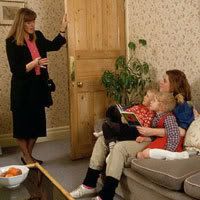 With the weather getting warmer and kids flocking to jungle gyms and sandboxes, a nanny snatcher may be circling a playground near you.
What exactly is a nanny snatcher, you ask? It's a parent who will stop at nothing to provide the perfect caregiver for her child--even if it means stealing one from you. A nanny snatcher will march right up to your employee while she's playing with your kids in the park and offer everything from a doubled salary to souped-up health benefits.
One Manhattan mother remembers an incident on a Tribeca playground where another woman offered a nanny cash to make the switch immediately. That didn't go over too well; in response, the neighborhood moms shunned the poacher.
What gives?
 Kathryn Webb, president of Sterling, Va.-based HomeWork Solutions, a leading payroll and tax service for employers of nannies and other domestic employers, says she has seen wage escalation within just the past 18 months, which she attributes to the intensifying competition for legal, English-speaking nannies.
As demand for this rare breed grows, so will the temptation to poach.
Stealing Away
Alexa, a Manhattan art gallery director, was a full-time nanny for three years in Washington, D.C., and then for one year in the Hamptons, while she worked toward her bachelor's and master's degrees from 2002 to 2006. She says that as a young, college-educated, Caucasian woman, she was hot property on the playground.
"I was highly sought-after," says Alexa, who asked to be identified by only her first name. "Parents saw how engaged I was with the children--most nannies sit on a bench and read; they don't really play with the kids."
One brazen mother went so far as to offer her twice her hourly pay if she would pack up and switch families that coming weekend. Although Alexa declined this offer, along with several others, she says sometimes she wishes her loyalty to the children hadn't trumped her frustrations with their parents.
That loyalty is typical, say those in the industry.
"This is a work relationship like any other," says Pat Cascio, president of the International Nannies Association and owner of Morningside Nannies placement agency in Houston. "Nannies are very, very loyal and cannot be stolen if they feel respected and cared about. If they feel overworked and underpaid, they're going to look elsewhere."
Cascio emphasizes that most nannies, by nature, are sensitive caregivers, which tends to make them loyal. Often, they are parents themselves, supporting a family on their own.
"Parents need to take that into consideration [when finalizing salary and required hours]," says Cascio. "They need to walk in her shoes for a little bit."
Webb, of HomeWork Solutions, says there really isn't much empirical evidence available regarding nanny retention and salary, because a lot of payments are made under the table. However, from her 14 years of managing the taxes of parents who employee nannies, mostly in metro areas like Washington, D.C., New York and San Francisco, Webb estimates that the average term for a private child-care worker is one to one-and-a-half years.
Watch Her Back
A nanny is most susceptible to being stolen during her first three months of employment, says Webb, a time she calls "a make-or-break period."
If a nanny feels like she isn't being treated properly, she's more likely to leave the job earlier than later, to avoid forming a strong attachment with her charge.
Emily Dills, head of the Seattle Nanny Network, which was voted the best Seattle nanny agency by CitySearch.com for both 2006 and 2007, says that she adheres to particular rules when it comes to her own nanny.
First and foremost, she treats the nanny as a member of the family, not as an employee.
"She is the glue that binds our household," says Dills. "I maintain professional boundaries, but my nanny knows the value she brings to our family, and although hers is a role of service, we go out of our way to not treat her like a servant."
Dills makes a concerted effort to include her nanny in all family celebrations and offers more than standard holidays and bonuses to show the family's appreciation. She's so confident in her nanny's loyalty that she recently offered to "loan her" part time to a friend who recently had a baby.
"It’s always in the back of my mind that one day she won't be here," says Dill, "and I proactively give her many reasons to stay."
Did Alexa's family make those same gestures? Not entirely.
"Sometimes I wish I had taken the rival offer!" she remarks. "I had a couple of situations where the parents did not keep an open line of communication," particularly regarding hours, salary and methods of discipline. "The very best thing [parents can do] is to be honest."
So forget those playground poachers if you can. Giving a nanny the respect she deserves is the easiest way to keep her under your roof.
Source @ Forbes
With the weather getting warmer and kids flocking to jungle gyms and sandboxes, a nanny snatcher may be circling a playground near you.What exactly is a nanny snatcher, you ask? It's a parent who will stop at nothing to provide the perfect caregiver for her child--even if it means stealing one from you. A nanny snatcher will march right up to your employee while she's playing with your kids in the park and offer everything from a doubled salary to souped-up health benefits.
One Manhattan mother remembers an incident on a Tribeca playground where another woman offered a nanny cash to make the switch immediately. That didn't go over too well; in response, the neighborhood moms shunned the poacher.
What gives?
Kathryn Webb, president of Sterling, Va.-based HomeWork Solutions, a leading payroll and tax service for employers of nannies and other domestic employers, says she has seen wage escalation within just the past 18 months, which she attributes to the intensifying competition for legal, English-speaking nannies.As demand for this rare breed grows, so will the temptation to poach.
Stealing Away
Alexa, a Manhattan art gallery director, was a full-time nanny for three years in Washington, D.C., and then for one year in the Hamptons, while she worked toward her bachelor's and master's degrees from 2002 to 2006. She says that as a young, college-educated, Caucasian woman, she was hot property on the playground.
"I was highly sought-after," says Alexa, who asked to be identified by only her first name. "Parents saw how engaged I was with the children--most nannies sit on a bench and read; they don't really play with the kids."
One brazen mother went so far as to offer her twice her hourly pay if she would pack up and switch families that coming weekend. Although Alexa declined this offer, along with several others, she says sometimes she wishes her loyalty to the children hadn't trumped her frustrations with their parents.
That loyalty is typical, say those in the industry.
"This is a work relationship like any other," says Pat Cascio, president of the International Nannies Association and owner of Morningside Nannies placement agency in Houston. "Nannies are very, very loyal and cannot be stolen if they feel respected and cared about. If they feel overworked and underpaid, they're going to look elsewhere."
Cascio emphasizes that most nannies, by nature, are sensitive caregivers, which tends to make them loyal. Often, they are parents themselves, supporting a family on their own.
"Parents need to take that into consideration [when finalizing salary and required hours]," says Cascio. "They need to walk in her shoes for a little bit."
Webb, of HomeWork Solutions, says there really isn't much empirical evidence available regarding nanny retention and salary, because a lot of payments are made under the table. However, from her 14 years of managing the taxes of parents who employee nannies, mostly in metro areas like Washington, D.C., New York and San Francisco, Webb estimates that the average term for a private child-care worker is one to one-and-a-half years.
Watch Her Back
A nanny is most susceptible to being stolen during her first three months of employment, says Webb, a time she calls "a make-or-break period."
If a nanny feels like she isn't being treated properly, she's more likely to leave the job earlier than later, to avoid forming a strong attachment with her charge.
Emily Dills, head of the Seattle Nanny Network, which was voted the best Seattle nanny agency by CitySearch.com for both 2006 and 2007, says that she adheres to particular rules when it comes to her own nanny.
First and foremost, she treats the nanny as a member of the family, not as an employee.
"She is the glue that binds our household," says Dills. "I maintain professional boundaries, but my nanny knows the value she brings to our family, and although hers is a role of service, we go out of our way to not treat her like a servant."
Dills makes a concerted effort to include her nanny in all family celebrations and offers more than standard holidays and bonuses to show the family's appreciation. She's so confident in her nanny's loyalty that she recently offered to "loan her" part time to a friend who recently had a baby.
"It’s always in the back of my mind that one day she won't be here," says Dill, "and I proactively give her many reasons to stay."
Did Alexa's family make those same gestures? Not entirely.
"Sometimes I wish I had taken the rival offer!" she remarks. "I had a couple of situations where the parents did not keep an open line of communication," particularly regarding hours, salary and methods of discipline. "The very best thing [parents can do] is to be honest."
So forget those playground poachers if you can. Giving a nanny the respect she deserves is the easiest way to keep her under your roof.
Source @ Forbes
Monday, April 23, 2007
Subscribe to:
Posts (Atom)


